
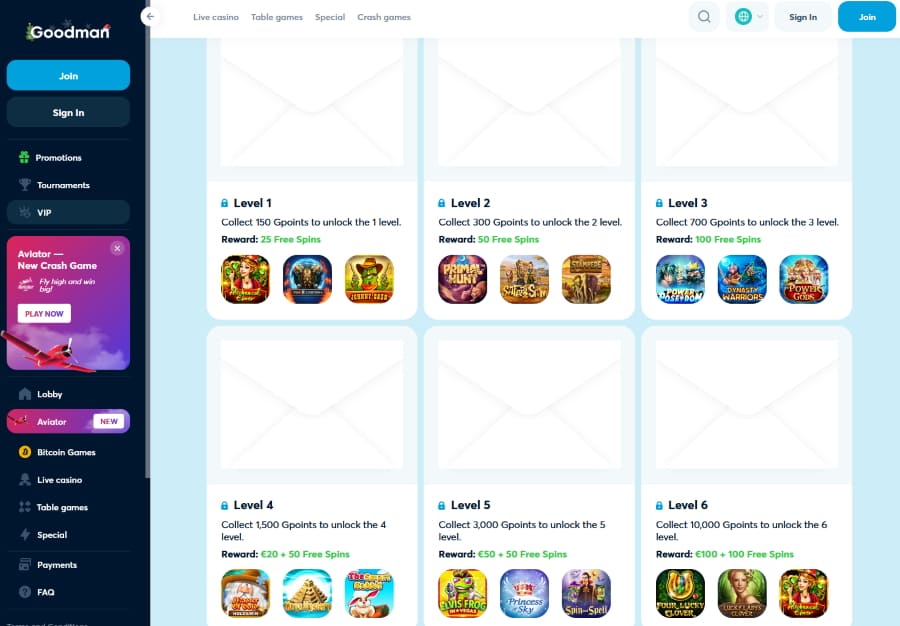
When Swiss players land on an online casino homepage, the first element that catches their eye is generally a extensive grid of brightly coloured game thumbnails. Numbers like 2,000 or 4,000 titles are tossed around as if massive numbers alone guarantees satisfaction. We consider this as a skillfully made illusion that often conceals an disturbing truth: the bulk of those games are filler content. A genuine selection is not about how many icons you can squeeze into a lobby. It is about curating a portfolio where every title justifies its inclusion through technical stability, fair math, and a design that caters to genuine player needs. In Switzerland, a market renowned for requiring top standards in banking and privacy, that expectation reaches entertainment. We think the real story of game selection deserves a far more thorough look than a banner number can ever give.
The illusion of quantity over quality
Many operator pages proudly declare a selection of 5,000 or even 10,000 slots. On the surface, this looks like endless choice. In practice, the majority are reworked versions of the same mathematical model with slightly altered graphics and a different title. We have spent years studying game catalogues across multiple jurisdictions, and the pattern is steady: a handful of top-performing, rigorously tested games sit next to hundreds of titles that generate almost no player engagement. These filler games exist to inflate a marketing figure, not to provide meaningful entertainment.
At Good Man Casino, our approach has always been to flip that logic. We prefer a more compact, more carefully selected assortment where every slot, table game, and live dealer variant has been screened for return-to-player transparency, mechanical integrity, and actual user enjoyment. A more modest but better-sourced lobby reduces decision fatigue and ensures that when a Swiss player opens a game, the session is exactly what the thumbnail suggested. This is not about limiting freedom. It is about refusing to squander anyone’s time with offerings that should never have passed a preliminary quality check in the first place.
When quantity is the only selling point, management also becomes a real technical challenge. Older software that never gets updated can introduce compatibility issues, slow loading, and even security gaps. A library with 3,000 ignored titles is less a feature and more a liability. We think the frank conversation around game selection starts by acknowledging that more is not better. It is often just more noise.
Tailoring Games to the Swiss-language Player
Switzerland is not a homogeneous market. With four official languages and distinct regional inclinations, the idea of a unique „Swiss player“ is misleading. A casino that considers its local audience seriously needs to account for the fact that a player in Geneva may prefer French-language roulette tables and game show styles, while a person in Zurich might search for German-speaking blackjack dealers and slots with mechanical or alpine motifs. These details are invisible on a global spreadsheet but immediately perceived when you log in and nothing seems like it was designed for you.
Currency and payment integration matter as much as language. Swiss francs are currently the bedrock of daily life, and pushing players to mentally convert every bet into euros causes needless cognitive friction. At Good Man Casino, we maintain CHF as a core account currency with real-time conversion only when strictly necessary. We also choose games that natively handle Swiss franc denomination without rounding irregularities that can appear in multi-currency wallets. These elements sound small, but they build up into a sense of whether the platform honours local reality or simply converts a generic template.
We also consider cultural seasons and events. During the colder months, Swiss players prefer longer, more immersive session games with gentle volatility curves, what we internally name „winter chair games.“ In summer, faster cycle slots and short-round live dealer tables see a noticeable uptick. By rotating featured titles to align with these natural patterns, a casino proves it is listening. Our curation calendar is derived from actual Swiss player behaviour patterns, not a pan-European promotional schedule.
The Licensing Puzzle: RNG, RTP and Fairness
Every game in a legitimate Swiss-facing casino carries a projected return-to-player percentage, often abbreviated as RTP. That figure is not a commitment of individual session outcomes, but it determines the long-term mathematical edge built into the software. What many players do not realise is that some providers publish the same slot under several RTP configurations, and operators can decide which version to host. A Starburst at one casino might run at 96.09%, while at another it could be set to 94.04%. That gap is substantial over thousands of spins.
Certified random number generators, commonly referred to as RNG, underpin this complete system. Without independent testing, there is no way to validate that a game’s advertised RTP matches its actual performance. Swiss regulation, enforced by the Eidgenössische Spielbankenkommission (ESBK), demands that licensed casinos submit their systems to rigorous auditing. This provides a statutory floor of player protection that unlicensed grey-market sites simply overlook. We insist on displaying not only the RTP values but also the audit certificates for our most frequented titles, because transparency here is the only currency that passes scrutiny.
Beyond the RNG, fairness also involves how bonus mechanics are structured. Features like cascading wins, progressive multipliers, and bonus buys introduce intricate probability branches. A game can technically pass an RNG audit while still delivering wildly inconsistent experiences if the volatility model is inconsistent with the advertised experience level. We review every new addition against its stated volatility grade and expected hit frequency. When a game consistently fails to match its own description, it is taken out from our lobby regardless of how popular it might be elsewhere. That is the type of editorial discipline that separates a curated portfolio from a warehouse full of licenses.
The Live Casino Dimension
Live croupier games have moved from a niche curiosity to the centre of the modern casino experience. In Switzerland, where land-based casinos have a deep history of refined table games, the bar for online live roulette, baccarat, and blackjack is remarkably high. A camera pointed at a green table is not enough. Players expect professional, multilingual dealers, clear audio, and an interface that lets them communicate with the table without covering the essential information. We evaluate live casino selection by studio geography, table variety, and the linguistic capabilities of the dealer team.
Latency is the unseen threat of live casino sessions. If the video feed stutters during a crucial roulette spin or the bet placement timer stalls, the entire trust architecture collapses. We optimise our live streaming delivery by working directly with providers to host edge servers that lessen the distance between the studio and our Swiss users. This is not marketing fluff; it is a verifiable reduction in round-trip time that directly impacts how polished a session feels. When we scrutinise a live casino provider, we track latency across three different Swiss internet service providers before making a decision.
The shift towards game show formats like Crazy Time or Monopoly Live has created a unique kind of selection challenge. These titles are entertainment products first and casino games second. Their appeal is in the host’s charisma, the studio set, and the bonus round theatrics. For some Swiss players, these formats are exactly what makes live casino worth trying. For others, they undermine the seriousness of traditional table gaming. A mature game selection balances both without forcing one audience to wade through the other’s content.
The Core Engine: Software Providers That Are Important
Behind every clean lobby lies a framework of commercial agreements between the operator and game studios. These relationships define the limit of what an online casino can actually offer. We judge casinos not by how many providers they list, but by who those providers are and how closely they are integrated. A direct integration with a tier-one studio means quicker updates, exclusive features, and access to the studio’s full technical support. Aggregator platforms, conversely, can introduce a layer of opacity where the casino itself may not fully control game mechanics or even uptime.
For Swiss players, casino good man, the key names include Evolution, NetEnt, Play’n GO, Pragmatic Play, and Microgaming. These studios operate under multiple gambling authority licences and subject their games to regular third-party audits. Their presence in a casino’s portfolio signals a baseline of technical rigour that no marketing budget can imitate. We also pay close attention to smaller studios like Nolimit City or Relax Gaming, which often push mechanical innovation far more than the industry giants. A healthy mix between established and niche providers is usually the sign of a team that genuinely understands game design rather than one that simply signed every partnership agreement offered.
Major Players and Specialist Developers
The big studios bring reliability, massive jackpot networks, and slick production values. Evolution, for instance, commands live casino with multi-camera studios and game show hybrids that hardly any competitors can match at scale. NetEnt and Microgaming still provide iconic slots that have set player expectations for years. Depending purely on these names can make a lobby feel generic, though. The same 50 titles appear on hundreds of domains, and that sameness undermines loyalty over time.
Niche innovators balance this by offering experiences that feel personal and frequently risky, in the best sense. A studio like ELK Studios designs slots around complex betting strategies built directly into the interface. Thunderkick makes visually eccentric games with unusual mathematical structures. For a Swiss audience that appreciates precision and understated design, these smaller studios often fit more naturally with local taste than mass-market blockbusters. We consistently monitor which independent developers are gaining popularity in Switzerland and tweak our portfolio when a studio consistently delivers higher engagement rates than the industry average.
Why exactly Live Studio Quality Can Vary Drastically
Across the identical provider, the caliber of a live dealer table can vary based on the studio studio location, the camera rig utilized, and the network infrastructure connecting it to the end user. We have seen cases where two casinos both host a single Evolution blackjack table, yet the streaming latency diverges by over a second because one casino routes traffic through an outdated aggregator node. That single second transforms a smooth session into a laggy, frustrating experience. Game selection is far from about ticking a provider box. It requires whether the technical pipeline behind that provider offers what the studio actually intended.
Mobile Experience: Beyond Just Scaling Down
More than two-thirds of Swiss online casino traffic now arrives through mobile devices, a number that has been climbing continuously. Yet many operator websites still handle mobile as an lower priority, a compressed version of the desktop lobby with smaller buttons and occasional layout breaks. We view mobile not as a scaled-down copy but as the primary environment for which games should be designed. The touch targets, gesture controls, and portrait orientation behaviour of each title are evaluated individually upon integration.
HTML5 technology has essentially solved the technical compatibility question, but the design question stays unresolved. A slot that plays beautifully in landscape mode on a tablet may become very difficult in portrait mode on a smartphone if the spin button and balance display were not made responsive. We check every game we integrate on at least three different mobile screen sizes and operating system versions before it ever enters the live lobby. Games that do not pass this practical test are returned to the provider with a thorough report. This slows down our portfolio growth but eliminates a large category of player frustration before it starts. couverture complète
Switzerland’s mobile infrastructure, with its reliable 4G and expanding 5G coverage, means players expect instant loads. A game that takes longer than a few seconds to load on a fast connection is probably won’t stay in our catalogue. We pay careful attention to initial load times and the frequency of server round-trips during gameplay. A well-optimised mobile portfolio is not about the number of titles that can be opened. It is about how many of them open without a single moment of hesitation.
Moving Past the Main Hall: Active Portfolio Management
Most articles about casino game choice stop at the moment a game enters the lobby. We believe that is where the actual work starts. An unchanging portfolio deteriorates. User preferences change, software patches add bugs, and a title that was once a premier title can quietly deteriorate through neglect. Ongoing portfolio management involves setting clear assessment cycles, monitoring session completion rates, and being prepared to phase out games that no longer satisfy the current quality standard.
We follow a set of concealed performance indicators that the average player never notices but feels indirectly. Mean session duration per game, premature departures during bonus rounds, and numerous short-duration sessions to the same title often indicate a mismatch between anticipation and experience. When we identify a game with these trends, our first step is to investigate whether the problem is technical or design-related. If the provider cannot address it, the game is removed. This pruning process is as important as the addition of new games, because a crowded lobby full of lackluster titles drags down the view of the whole platform.
Swiss-based players tend to be loyal to gaming sites that show curatorial consistency. They recognize when a title they trusted suddenly behaves differently or when a appealing title disappears without explanation. Our dedication is to make these decisions clearly and to communicate portfolio changes before they affect a player’s gaming flow. The following internal protocol directs our monthly portfolio review at Good Man Casino, and we maintain it represents the type of structured thinking that should be standard industry practice.
- Verify RNG audit certificates for all fresh titles within the review period.
- Assess average game load time across PC, tablet, and smartphone form factors.
- Study session abandonment rates specifically during bonus feature activations.
- Verify for Swiss franc denomination accuracy in bet scaling and payout displays.
- Examine provider patch notes and update any title that has received a stability fix.
- Assess player feedback submitted through our integrated rating system for each game.
- Remove any title whose RTP configuration has been silently lowered by the provider.
Our list is not confidential. It is how we make ourselves accountable to the single metric that matters: if a game deserves to stay. A selected casino never stops curating. The real story behind game selection is that it is not a one-time purchasing decision made months ago; it is a ongoing editorial practice that determines the complete player experience.